
MILAN, Italy — Tokyo James isn’t a corporate suit kind of guy. Little by little, he’s been turning his eponymous brand into a reliable source for special separates, the kind that make fans among the young Nollywood crowd. For Spring/ Summer 2026, something special comes in the form of all sorts of sharp tailoring, including deconstructed leather pieces through which the top and bottom of them have been woven together.
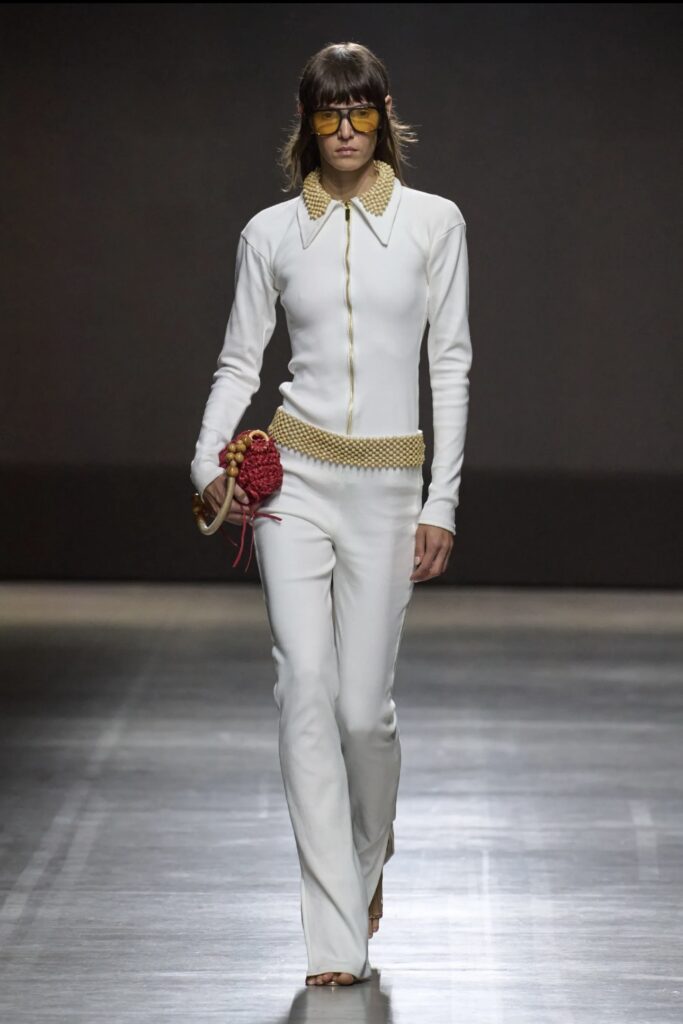


And woven through the whole offerings were some of the signatures that James has extracted from the decade-long history of the brand: the handcrafted crochet bags, oversized woven details, and intricate beading. Actually, it wasn’t so much that the designer blended together his breadth of fascinations; it was more like he drew and twined them to create volume and movement.
“The collection is called Chaos, and it came from everyday life,” James told GLASS backstage post-show. “I wanted it to be artistic but at the same time very much wearable, and I wanted it to feature a series of statement pieces, something that you’ll be able to go out with,” he added.

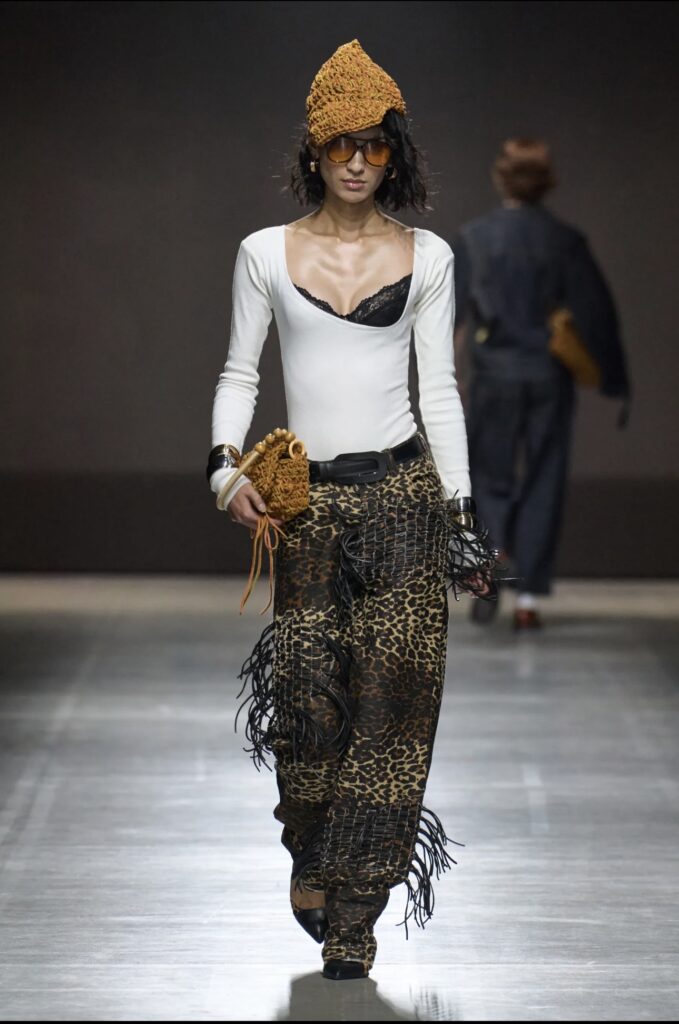

“Strike up a conversation and people look at you but still, again, wearable. The mixture of art and craft is something that we’re really, really excited about because there was a lot of experimental craftsmanship this season and it’s something we’re excited to do.” James’ references always bet on Nigeria, London, and Milan’s heritages, three cities he deems “the greatest in the world.”
On the collection, “I think the best one for me and my standout one was the tiger print, the leopard print pants with the beaded legs,” he says. James showed a women’s collection in February, but not in Milan. “We did it in Lagos because it was a celebration of our 10 years of existence as a brand,” he noted.
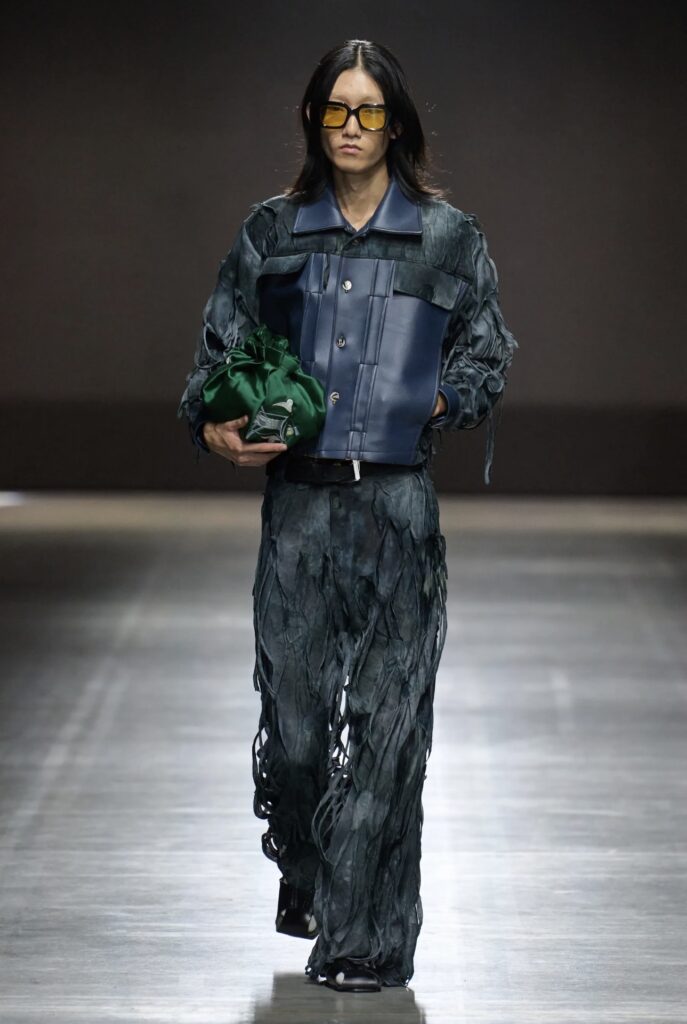
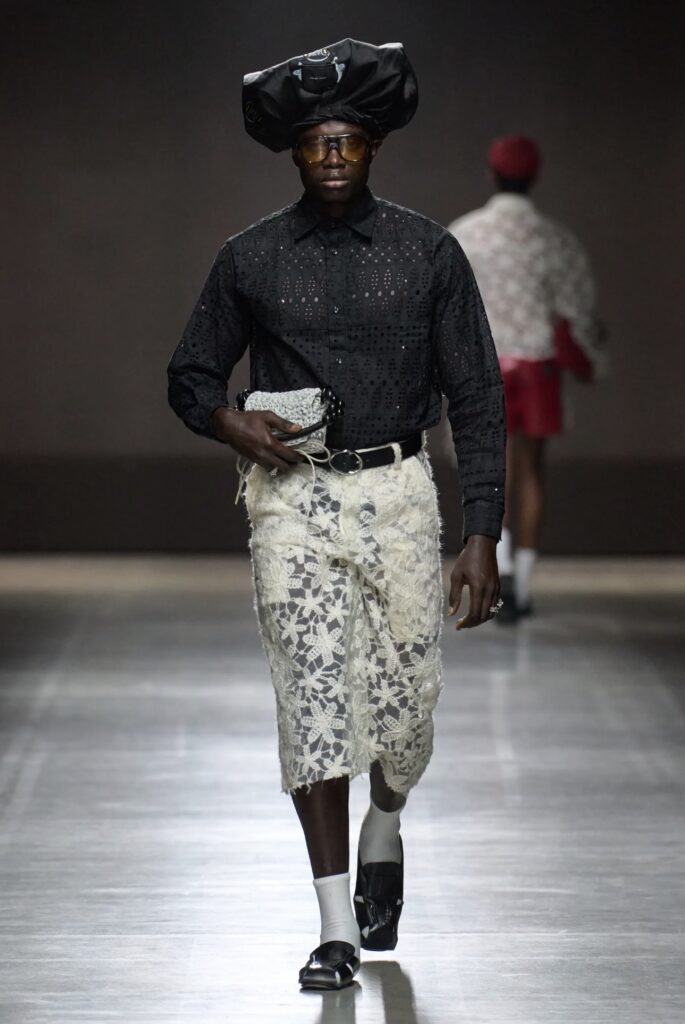
This season, James partnered with Nahous, a cultural foundation dedicated to supporting art and creativity across Africa. In celebration of this collaboration, five exclusive looks were created for Nahous and revealed on the runway to exemplify James’ mastery of form and Nahous’ mission to champion African creativity on the global stage.
by Chidozie Obasi